coffee roaster for small business buying guide

Test your roast and your market before you buy a commercial machine

The best coffee roasters for testing a small coffee business

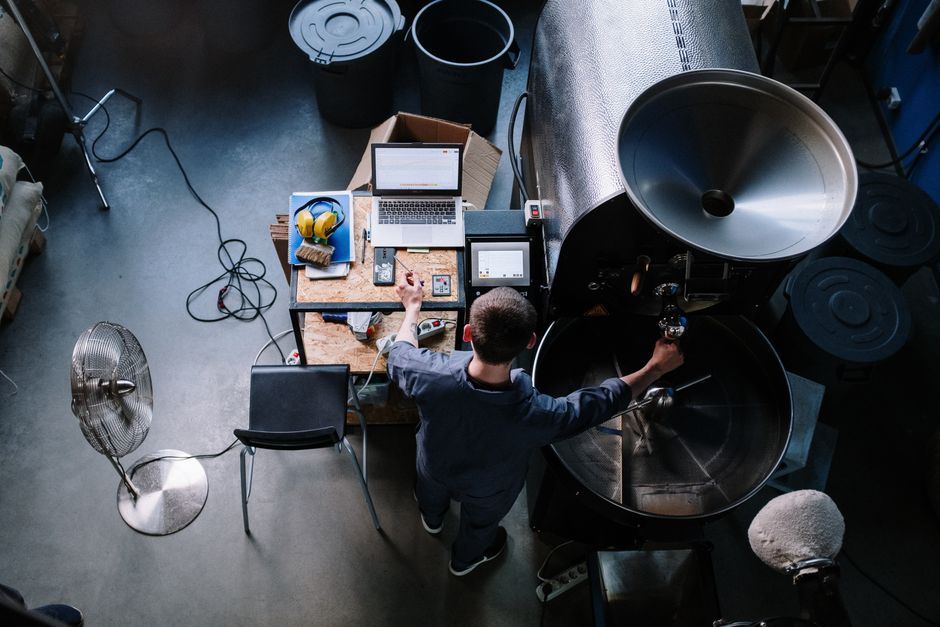
A commercial roaster and a permitted space can run $25,000 or more. Most people who now run a small roastery started by proving out their roast and their market on equipment like this first.

See the starter picks
⚡ Limited-time perk

Free two-day delivery on your pick

Get your pick delivered fast -- try Amazon Prime free for 30 days.

Sponsored link -- we may earn a fee if you sign up. No extra cost to you.

Quick answer: Our top pick for coffee roaster for small business is the Behmor 2000AB Plus Coffee Roaster (Best for Higher-Volume Batches). If you're looking for best for dialing in a recipe, the Fresh Roast SR800 Coffee Roaster is a strong alternative.

You don't need a commercial roaster to find out if this is worth pursuing

Reviewed by the RoastVale team · last updated 2026-08-27

A permitted commercial roasting space typically runs $1,500-3,000 a month in rent plus $25,000-35,000 in equipment -- a serious commitment before you know whether your roast is any good or anyone will pay for it. Most people who eventually run a small roastery started on home-scale equipment like the roasters in our main lineup, using them to develop a recipe and sell in small quantities -- farmers markets, a subscription list, friends and neighbors -- before scaling up.

The tradeoffs here matter more once you're roasting for other people, not just yourself. The Behmor's built-in smoke suppression and larger 1 lb batch make it the most realistic of these four for repeated, back-to-back roasting sessions. The SR800 and SR540 share the same manual heat/fan control system, which is what lets you actually develop and describe a repeatable roast profile -- important groundwork if you ever want to hand that recipe to bigger equipment later. The Nesco trades that control away for simplicity, which is fine if you're set on one straightforward roast style.

Be realistic about the ceiling: home roasters like these generally cap out well under 50 lbs of green coffee a week before the equipment itself becomes the bottleneck. That's a real limit for testing an idea, not a long-term production plan.

Check your local rules before you sell anything

Whether you can legally sell coffee roasted at home depends on your state and local health department -- some allow home-based food production under specific conditions, others require a licensed commercial kitchen, and roasted coffee sold across state lines can trigger FDA food facility registration. Check this before you invest in equipment, not after.

Smoke handling stops being optional at volume

Roasting one batch for yourself near an open window is manageable. Roasting several batches back-to-back to fill orders is a different problem -- the Behmor's built-in smoke suppression exists specifically for this, while the fluid-bed roasters here rely on you having a range hood or good ventilation.

Recipe repeatability matters more than batch size at first

Before you worry about how much you can produce, you need a roast you can reliably reproduce and describe. The manual heat/fan control on the SR800 and SR540 is built for that kind of experimentation; the Nesco's one-button simplicity is easier to run but harder to fine-tune.

Product Best For Price Rating
Behmor 2000AB Plus Coffee Roaster Best for Higher-Volume Batches $400 - $450 4.6/5
Fresh Roast SR800 Coffee Roaster Best for Dialing In a Recipe $220 - $260 4.6/5
Fresh Roast SR540 Coffee Roaster Best Low-Cost Way to Test the Market $180 - $210 4.5/5
Nesco CR-1010-PR Coffee Bean Roaster Best for Simple, Repeatable Batches $100 - $130 4.2/5
Best for Higher-Volume Batches

Behmor 2000AB Plus Coffee Roaster

4.6

The highest per-batch output in this lineup at up to 1 lb, with built-in smoke suppression that matters once you're running back-to-back batches instead of a single cup -- smoke handling is one of the first things that turns into a real constraint once you're roasting for other people.

  • Highest batch capacity here, roughly triple the SR800's batch size
  • Built-in smoke suppression matters more once you're roasting repeatedly
  • Preset profiles plus full manual mode once you've found a recipe worth repeating
  • Highest price of the picks here
  • Still a home appliance -- well short of commercial drum-roaster throughput
Best for Dialing In a Recipe

Fresh Roast SR800 Coffee Roaster

4.6

Independent heat and fan control plus a glass chamber make this the easiest pick here for developing a repeatable roast profile you can describe and reproduce -- the exact groundwork you need before you can promise customers a consistent product.

  • Independent heat/fan control for real roast-profile tuning
  • Glass chamber lets you judge and log roast color by sight
  • Roasts a full 8 oz batch in under 10 minutes
  • No built-in smoke filtration, needs a range hood or open window
  • 6-8 oz batches mean many roasts to build up sellable inventory
Best Low-Cost Way to Test the Market

Fresh Roast SR540 Coffee Roaster

4.5

The cheapest way into the same manual heat/fan control system as the SR800, which makes it a reasonable way to find out whether you even enjoy roasting and can sell what you make before committing more money to bigger equipment.

  • Lowest-cost way into real manual roast control
  • Same control system as the SR800, so recipes carry over if you upgrade
  • Compact enough to test on a kitchen counter before committing space to it
  • 4 oz batches are small for anything beyond early testing
  • You'll likely outgrow it fast if the business idea works out
Best for Simple, Repeatable Batches

Nesco CR-1010-PR Coffee Bean Roaster

4.2

One-button, automatic roasting with catalytic smoke reduction -- less profile control than the manual roasters here, but that consistency-by-default can be an advantage if you want to sell one straightforward roast style without relearning technique every batch.

  • Lowest price of any roaster in this comparison
  • One-touch operation makes batch-to-batch consistency easier for a beginner
  • Catalytic converter cuts down on roasting smoke
  • Little room to tune a distinct, signature roast profile
  • Smallest batch size (1/3 lb) of the picks here

Frequently Asked Questions

Can I legally sell coffee I roasted at home?

It depends on your state and local health department -- some states allow home-based food production under a cottage food law, others require a licensed commercial kitchen for anything sold to the public, and selling across state lines can require FDA food facility registration. Check your local rules before you start selling, not after you've bought equipment.

How much coffee can I realistically roast per week on equipment like this?

Home roasters in this category generally cap out well under 50 lbs of green coffee a week before the roaster itself becomes the bottleneck. That's enough to test a small customer base -- a farmers market table or a short subscription list -- but not a full-scale production plan.

Which of these is best for developing a recipe I could eventually scale up?

The Fresh Roast SR800 or SR540, since their independent manual heat and fan control let you tune and document an exact roast profile. That kind of profile is what you'd eventually hand off to a commercial drum roaster -- the Nesco's automatic one-button roasting doesn't give you the same level of control to work from.

View our top pick →